


 NHL Standings 2025/2026
NHL Standings 2025/2026
NHL standings 2025 are an essential tool for tracking team performance and understanding the dynamics of the National Hockey League (NHL) season. The National Hockey League (NHL) is a premier professional ice hockey league established in 1917 and is celebrated for its rich history and competitive nature. Fans and bettors worldwide flock to the National Hockey League (NHL), which boasts 32 teams across North America. The league's structure and competition are meticulously organized, making tools like the NHL standings 2025 an indispensable resource for understanding team performance and dynamics throughout the season.
The NHL standings serve a critical purpose in ranking teams based on their regular-season performance. The standings are determined using a points-based system where teams earn two points for a win, one point for an overtime or shootout loss, and zero points for a regulation loss. The system highlights team success and helps determine playoff qualifications, seedings, and matchups. The NHL leaderboard provides a real-time snapshot of team rankings, offering fans and bettors a comprehensive view of the competitive landscape. Analyzing the NHL standings 2025 is essential for understanding team strengths, trends, and potential playoff scenarios, making it a vital tool for strategizing in fandom and betting.
The NHL is comprised of 32 teams divided into the Eastern and Western Conferences. Each conference is further split into two NHL divisions. The Eastern Conference includes the Atlantic Division and the Metropolitan Division, with powerhouses like the Boston Bruins and the Carolina Hurricanes frequently dominating the NHL Eastern Conference standings. The Western Conference comprises the Central and Pacific divisions, showcasing competitive teams such as the Colorado Avalanche and the Vegas Golden Knights, who shape the NHL Western Conference Standings. The division and conference structure ensures balanced competition and provides an organized framework for tracking team performance.
Wagering on NHL games with platforms like Ufabet offers unique advantages for viewers interested in betting. Betting with Ufabet provides access to competitive odds, diverse betting markets, and real-time updates on the NHL standings, allowing bettors to make informed decisions. The platform leverages the detailed data provided by the NHL rankings and divisional standings, enabling bettors to identify trends and uncover value in various matchups. The ever-changing NHL season makes it an invaluable resource for bettors.
The NHL standings 2025 are a cornerstone for understanding team performance and navigating the competitive landscape of the league. Fans and bettors gain valuable insights by analyzing the NHL divisions, NHL Eastern Conference standings, and NHL Western Conference standings. Platforms like Ufabet offer new excitement and rewards for betting enthusiasts by combining strategic data with a fun and engaging way to wager on NHL games.
J1 League Table - 2025/2026 Season
Coming soon
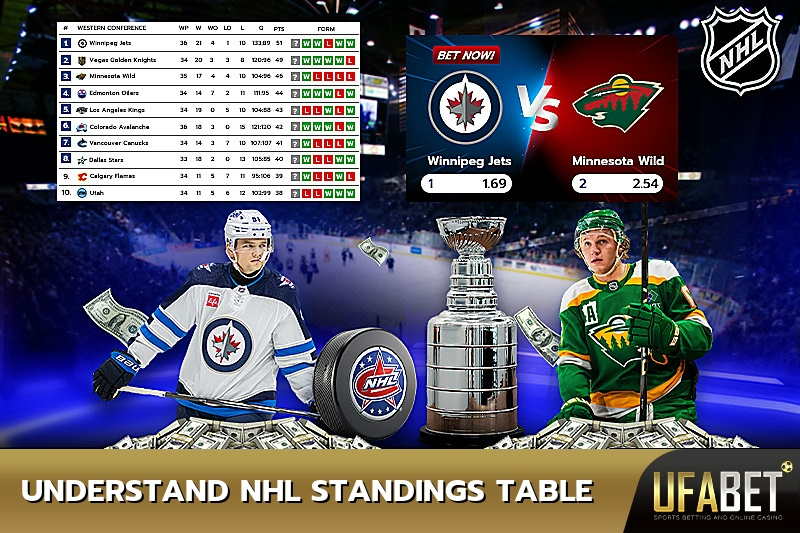
How to Understand the NHL Standings Table?
How Important are the NHL Rankings for Betting?
The NHL rankings for betting are important because they offer insights into team performance and trends that directly impact NHL odds. Bettors improve their odds of winning by making educated selections based on thorough analysis of the metrics provided by NHL standings.
The NHL standings serve as a snapshot of team performance, reflecting metrics like wins, losses, and total points. The rankings influence betting decisions by clearly understanding team strengths and weaknesses. High-ranking teams have a consistent record, but additional insights such as recent form and home/away performance reveal deeper trends. Bettors use these standings to identify mismatches, value bets, and trends that are not immediately apparent. For example, an undervalued team in the standings exposes opportunities where NHL odds fail to reflect their potential.
Several attributes within the standings are valuable for NHL betting. Home and away records are essential as they highlight a team’s performance in familiar versus hostile environments. Teams exhibit substantial home-ice advantages due to fan support and familiar conditions, making it a critical consideration for matchups. Metrics such as goals for and against provide insights into offensive and defensive capabilities. NHL betting strategies are influenced by goals-for and goals-against averages, which show the offensive and defensive strengths of a team, respectively.
Performance against the spread (ATS) is another key metric that measures how frequently a team meets or exceeds bookmaker expectations. Teams with strong ATS records are reliable options for strategic wagers. Special teams' performance, including power-play and penalty-kill efficiency, adds another layer of depth, as these metrics impact game outcomes. The recent form provides a snapshot of current trends. It is used to determine if a team is gaining or losing momentum. The form is evaluated over the last five to ten games.
Strategic advantages emerge when bettors effectively utilize NHL standings. Analyzing these attributes reduces emotional or impulsive betting, aligning decisions with factual performance data. It allows bettors to exploit market inefficiencies by identifying discrepancies between public perception and actual team capabilities. Observing professional betting patterns and sharp money indicators further validates predictions and highlights potential upsets.
How are Teams Ranked for Positions in the NHL Standings?
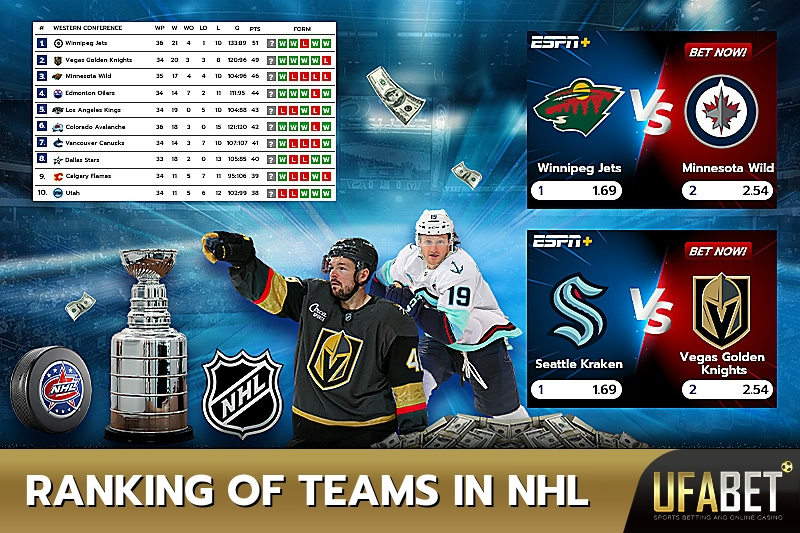
The teams are ranked for positions in the NHL standings using a structured point system that evaluates their performance across the regular season and incorporates detailed tiebreaker criteria when necessary. Total points accumulated through game outcomes are the primary factors determining a team’s position. NHL teams earn two points for a win (regulation or overtime), one point for a loss in overtime or a shootout, and zero points for a regulation loss. The point system is the foundation for determining NHL rankings, emphasizing consistent performance and game success.
The NHL uses specific tiebreakers to rank teams with equal point totals. The first tiebreaker is regulation wins (RW), prioritizing victories achieved in regulation time, reflecting a team’s strength without the influence of overtime or shootouts. All wins, including overtime, are considered if the tie continues. The next tiebreaker is the head-to-head record, evaluating the results of games played between the tied teams. Further criteria include goal differential, which measures the difference between goals scored and allowed, and total goals scored, highlighting offensive efficiency.
The ranking system is designed to fairly and accurately represent team performance throughout the season. Regulation wins are prioritized to reward teams that secure victories within standard playtime, encouraging consistent dominance over opponents. Goal differential and total goals scored provide deeper insights into a team’s competitiveness, factoring in offensive and defensive capabilities.
The NHL rankings reflect the total points accumulated by a team and their quality of play in critical moments. The rankings are updated frequently after each game, ensuring that fans and bettors have access to the latest standings. The NHL standings provide a clear and comprehensive picture of team performance using the combination of point accumulation and tiebreaker criteria, determining playoff positions and showcasing the league’s competitive balance.
What are the Factors that Influence the NHL Standings?
The factors that influence the NHL standings are listed below.
- Team Performance: The effectiveness of a team's offense and defense, including their ability to consistently win games and earn points throughout the season.
- Player and Roster Factors: The players' skills, the team's chemistry, and the depth of talent available on the roster to maintain performance over a long season.
- Schedule and Travel: The impact of the game schedule, including the frequency of games, back-to-back matches, and the effects of travel fatigue on long road trips.
- Coaching and Strategy: The influence of the coaching staff's decisions, including game plans, in-game adjustments, and the strategic approach to managing the team.
- Momentum and Streaks: The psychological impact of winning or losing streaks positively or negatively affects team confidence and performance.
- Goaltending: The performance and reliability of goaltenders are crucial in close games and high-pressure situations.
- Trades and Acquisitions: The effect of acquiring new players through trades or other means alters team dynamics and improves or disrupts performance.
- Injuries: The impact of player injuries on the lineup affects team performance depending on the importance of the injured players.
- Special Teams Performance: The efficiency of the power play and penalty kill units, which influence game outcomes and team success.
- Fan and Home Ice Advantage: Performance boosts are seen during home games due to fan support and familiarity with the home rink.
- Management Decisions: Decisions made by the general manager, including player contracts, salary cap management, and long-term planning.
- Statistical Luck and Variance: The role of random factors and luck, such as fortunate or unfortunate bounces of the puck and referee decisions.
- League Changes and Rules: Adaptation to changes in league rules and regulations that affect how games are played and officiated.
- Psychological Factors: Mental resilience, confidence, and stress management of players and teams, which impact performance and NHL rankings.

What is the Format for NHL Games?
The format for NHL games progresses from the regular season to the playoffs, ultimately culminating in the Stanley Cup Finals. Each phase tests the teams' skills, endurance, and strategy. The NHL regular season consists of 82 games for each team. A team's point total during the season is determined by its win-loss record in regular play, overtime, or a combination of the two. The points determine the standings within the divisions and conferences, with the top teams advancing to the playoffs.
The top three teams from each of the four divisions automatically qualify for the playoffs at the end of the regular season. The following two best teams in each conference, regardless of their division, earn wild card spots, making a total of 16 teams that compete in the playoffs. The playoffs are structured in rounds, including the first, second, conference, and Stanley Cup finals. The First Round pits the teams that won their respective divisions against the teams that received wild cards, while the teams that finished second and third in each division square off against one another. The champions from each division face off against one another in the Second Round (Division Finals). The teams that made it to the division finals compete against one another to claim glory in their respective conferences In the Conference Finals. The winners of the Eastern and Western conferences square off in the Stanley Cup Final.
All playoff games are best-of-seven, meaning the first team to win four games advances to the next round. The higher-seeded team, based on regular season performance, hosts four of the seven potential games, providing a home-ice advantage. The format ensures a rigorous and exciting progression of games, culminating in the prestigious battle for the Stanley Cup.